Shadow IT
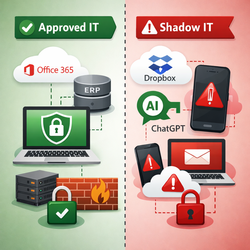
Shadow IT refers to the use of technology, applications, or devices within an organization that have not been approved, managed, or secured by the company’s IT department. This often occurs when employees adopt software or cloud services on their own to improve productivity or solve a problem more quickly than formal IT processes allow.
Common examples of shadow IT include employees using personal file-sharing services such as Dropbox or Google Drive to store company documents, signing up for SaaS applications with a corporate email address without IT approval, installing unauthorized software on company computers, or accessing business systems from unmanaged personal devices.
While shadow IT is often adopted with good intentions, it can introduce significant Cybersecurity and compliance risks. Unauthorized applications may store sensitive data outside of approved systems, lack proper security controls, or create gaps in monitoring, access management, and data protection. These risks can lead to data breaches, Malware infections, and Regulatory Compliance violations.
Organizations typically address shadow IT through stronger IT governance, user education, and centralized technology management. Working with a professional IT provider can help businesses gain visibility into unauthorized tools, enforce security policies, and ensure employees use approved, secure technology platforms.